Zerowatt Digital Brain · AI optimisation for large industrial plants
A complete AI digital brain for the entire plant.
It reads the data your plant already records, checks it against design, finds where energy and performance are drifting, and tells the team what to do.
- ISO 27001
- SOC 2 Type II
- Read-only
- On-premise option

What it is
An AI layer over the data your plant already records.
A large plant makes thousands of readings every second, held section by section in the DCS, the historian and the meters. No team can watch them all, all the time, and nobody reads them as a whole. The Digital Brain does.
Data the plant has
- DCS and historian
- SCADA and PLC
- Energy and utility meters
- Lab results and logbooks
Zerowatt Digital Brain
Reads the data, checks it against design, finds where energy and performance are drifting, and tells the team what to do.
What the team gets
- Ranked actions for the shift
- Energy performance by section
- Early warning on equipment health
- Answers in plain language
How it works
Three layers: process chain, rule-based logic, AI agents.
 01
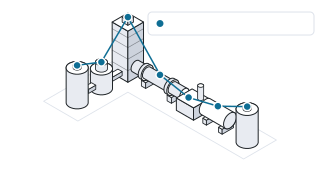
Process chain
A digital twin of the whole process chain, built from first principles: design data, heat and mass balances, equipment curves, and the plant’s own best runs. It states what every section should be doing at the present load.
 02
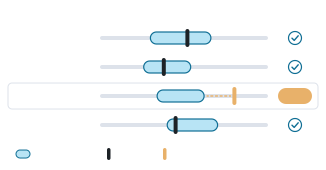
Rule-based logic
Hundreds of statistical and engineering rules compare measured values with expected ones, apply materiality thresholds, and decide what counts as a finding. Deterministic, with no AI involved.
 03
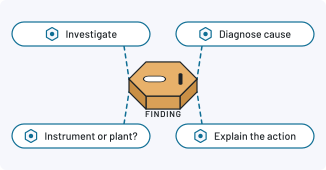
AI agents
Specialised AI agents investigate each finding, separate an instrument fault from a plant fault, explain the cause and the action, and answer questions in plain language. Read-only, and reviewed by plant personnel.
From a reading to a ranked action
One finding, step by step: Compressor C-3, compressed-air plant.
Try Zoe
Try Zoe on sample plant data.
See how Zoe finds the cause, the cost, and the fix.
 Interactive demo
 Pick a question. Zoe answers from sample plant data.
Pick a question to start

Sample plant data. Answers are illustrative.
What a finding looks like
Every finding answers four questions: what’s wrong, why, what it costs, and what to do.
Specific power up from 6.2 to 7.1 kW per m³/min in 11 days.
- Why
Fouled aftercooler, restricted drain valve.
- Cost
₹47,000 a month
- What to do
Clean the aftercooler. Clear the drain valve.
Use cases by industry
What Zerowatt Digital Brain finds, and what the team does.
Choose your industry to see what the Digital Brain watches, what it finds, and what your team does about it.
Thermal and captive power plants
A digital twin of the unit
Built from the DCS, historian, and meter data the station already has, and checked against design. It also serves units on imported equipment where OEM support is limited.
What it watches
| Use case | What the Digital Brain finds | What the team does |
|---|---|---|
| Heat rate | Deviation from design, split by boiler, turbine, condenser, and auxiliaries | Works on the largest gap first |
| Boiler combustion | Excess air high, air-heater leakage rising, soot blowing overdue | Trims air, plans seal inspection, blows soot when it pays |
| Condenser and cooling water | Vacuum low for the load; air ingress suspected | Checks air ejector and gland sealing |
| Auxiliary power | Fans, mills, and feed pumps drawing more than the load needs | Closes recirculation, corrects mill and fan settings |
| Equipment health | A feed-pump bearing, mill gearbox, or ID fan leaving its normal band | Plans inspection before a breakdown |
Steel plants
Energy per tonne, unit by unit
Furnaces, mills, and the captive power plant are read together, so a loss in one unit is seen against the gas, steam, and power it draws from the rest of the works.
What it watches
| Use case | What the Digital Brain finds | What the team does |
|---|---|---|
| Furnace fuel rate | Fuel rate drifting from best runs; hot-blast temperature down | Checks stove changeover and blast conditions |
| Reheating furnaces | Fuel per tonne above best runs; excess air high | Corrects air-fuel ratio and holding time |
| Gas and steam networks | By-product gas flared while fuel is bought; steam vented | Rebalances gas and steam between units |
| Waste-heat recovery and power | Recovery below what the process offers; heat rate drifting | Restores recovery; treats the power plant as a unit |
| Equipment health | Blowers, fans, and mill drives leaving their normal band | Plans inspection before a breakdown |
Cement plants
Quarry to packing, in one picture
Each section of a cement line keeps its own data. The Digital Brain joins them into one material and heat flow, and compares every section with the line’s best runs.
What it watches
| Use case | What the Digital Brain finds | What the team does |
|---|---|---|
| Kiln and preheater | Heat consumption above the line’s best runs; false air at the preheater | Checks stage flaps and seals |
| Cooler | Less heat returned to the kiln; secondary air temperature down | Checks grate airflows |
| Grinding | Mill specific power high; cement ground finer than needed | Adjusts the separator |
| WHR and fans | WHR output falling; process fans drawing more power | Finds the cause upstream and corrects it |
| Equipment health | A kiln shell hot band, mill gearbox, or cooler fan bearing | Watches the trend and plans the stop |
Chemicals, chlor-alkali, and fertiliser
Process and utilities as a whole
Cell houses, reactors, and columns depend on steam, power, compressed gas, and cooling. The Digital Brain models the units and their utilities together.
What it watches
| Use case | What the Digital Brain finds | What the team does |
|---|---|---|
| Electrolysis | Cell power per tonne rising against best runs | Reviews loading and cell condition |
| Steam network | Steam per tonne rising; header pressure held too high | Resets the header setpoint; stops venting |
| Compressors and refrigeration | Machines below design performance or running at part load | Changes the running combination |
| Cooling water | Approach temperature rising and limiting the process | Checks tower fans, fill, and flow |
| Reactors and columns | Energy per tonne drifting from the unit’s best runs | Returns to proven operating conditions |
Pulp and paper mills
The steam balance, boiler to dryer
Steam is the mill’s main energy carrier. The Digital Brain follows it from the recovery and power boilers to the paper-machine dryers.
What it watches
| Use case | What the Digital Brain finds | What the team does |
|---|---|---|
| Steam balance | Steam per tonne of paper drifting; venting and letdown | Rebalances headers and extraction |
| Recovery and power boilers | Efficiency below design | Corrects combustion and soot blowing |
| Paper-machine dryers | Steam use and condensate return drifting from the best runs | Checks the steam and condensate system |
Refineries and oil and gas
Power, steam, and cooling water
The utilities block decides what the process units can do. The Digital Brain models captive power, steam headers, and cooling water as one network.
What it watches
| Use case | What the Digital Brain finds | What the team does |
|---|---|---|
| Steam headers | Header imbalance and letdown losses | Shifts load between boilers, turbines, and letdown |
| Cooling water | Approach temperature rising; pumps away from their best point | Checks towers and pump combination |
| Captive power | Heat rate and auxiliary power drifting | Applies the power-plant checks |
Large manufacturing plants
Energy per unit produced, line by line
Press lines, robot cells, machine shops, paint ovens, and heat-treatment furnaces are read from PLC, SCADA, and meter data.
What it watches
| Use case | What the Digital Brain finds | What the team does |
|---|---|---|
| Compressed air | Energy per unit rising; flow high when lines are idle | Surveys leaks; corrects pressure and sequencing |
| Ovens and furnaces | Energy above the best runs | Tunes exhaust and burners |
| Lines and drives | Press lines and motors running idle | Sets stop timers |
Large energy-intensive industries
Industries Zerowatt Digital Brain serves.
Any large plant with a control system, a data history, and a process that can be modelled from its design.
- Power and energy
 Thermal power stations · Captive power plants · Gas-based and combined-cycle power · Cogeneration · Waste-heat recovery
- Iron and steelIntegrated steel plants · Sponge iron · Arc and induction furnace steel · Rolling mills · Ferro-alloys · Foundry and forging
- Non-ferrous metalsAluminium smelters and refineries · Copper · Zinc and lead
- Cement and mineralsIntegrated cement plants · Grinding units · Lime · Glass · Ceramics and tiles · Refractories · Mining and mineral processing
- ChemicalsChlor-alkali · Fertiliser · Petrochemicals · Soda ash · Carbon black · Industrial gases · Speciality and agrochemicals
- Oil and gasRefineries · Gas processing · Petroleum terminals and pipelines
- Paper and fibrePulp and paper · Paperboard and packaging · Textiles · Man-made fibre · Tyres and rubber
- Other industriesSugar and distillery · Pharmaceuticals · Food and beverage · Edible oil · Automotive and components · Heavy engineering · District cooling
Deployment
Two ways to run it.
On servers inside your network, or in the Zerowatt cloud when your plant’s data is already there. Read-only either way, and outside your control network.
- Option 1
On your own servers
- Where it runs
- On servers inside your network. No internet connection is needed.
- How data arrives
- An edge gateway reads your control systems, or a historian bridge reads the historian you already run.
- Where the AI runs
- On a GPU beside the server, or on your own enterprise AI account: Google Vertex AI, Azure OpenAI, or Amazon Bedrock.
- What you provide
- The servers below, and a read-only data route.
- Option 2
In the Zerowatt cloud
- Where it runs
- In the Zerowatt cloud. For plants that already use Zerowatt Vitals.
- How data arrives
- It is already there, from your Vitals Enable gateways.
- Where the AI runs
- On Zerowatt’s enterprise AI accounts. Your data is never used to train AI models.
- What you provide
- Nothing new: no server, no gateway, no change on site.
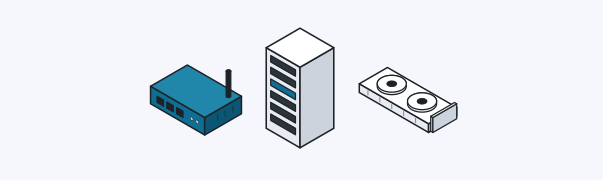

Running it on your own servers
- Platform server
- 12 CPU cores, 64 GB memory, 1 TB NVMe system disk, 1 TB NVMe database disk, and a separate disk for backups. Linux, with Docker.
- AI server
- Only when the AI runs on a GPU: one NVIDIA RTX PRO 5000 with 72 GB of memory.
- Updates
- Each release is a set of signed images. Your engineer checks every signature before installing, and can roll back to the previous release.
- Licence
- A licence file tied to the machine, checked on the machine itself.
- Remote access
- Our engineers reach the servers only through the remote-access tool your IT team chooses, when you grant access.
For your IT and OT teams: how Zerowatt sits beside your control systems.Security
Working with Zerowatt
From your data to findings for each shift.
- The plant needs
- A DCS, SCADA, or PLC system with stored data, metering on the main sections, design documents, and a read-only data route.
- Deployment
- On your own servers, or in the Zerowatt cloud when your plant’s data is already there. Read-only, and outside your control network.
Data in
Design documents and a historian export, or a read-only connection.
Model built
Process chain and rules, reviewed with the plant’s engineers.
Findings
Each section against design, with causes and actions.
Ongoing operation
Live data, findings for each shift, model kept current.
Findings shown on this page are illustrative examples, not client results.
See what Zerowatt finds in your facility.
Book a 30-minute consultation, and we’ll show you where your plant is losing energy.